Nanaimo sits on a geological patchwork shaped by the last glaciation—dense till overlying cretaceous sandstone in the north end, compressible marine silts near Departure Bay, and scattered organic deposits in the Chase River lowlands. With a population surpassing 100,000 and a building boom driving multi-storey mixed-use developments along Terminal Avenue, the assumption of uniform bearing capacity becomes a costly gamble. Shallow foundation design in this coastal city requires more than a textbook allowable bearing pressure; it demands correlation between in-situ plate load testing and laboratory consolidation curves to isolate the thin, normally consolidated lenses that can settle differentially under continuous footings. The National Building Code of Canada (NBCC 2020) sets the seismic baseline, but the microstratigraphy of the Nanaimo lowlands often dictates whether a rigid mat or an array of isolated footings is the safer, more economical choice.
In Nanaimo's glacial stratigraphy, a 20 kPa difference in assumed bearing capacity can translate into 12 millimetres of differential settlement over a 6-metre column grid.
Technical details of the service in Nanaimo
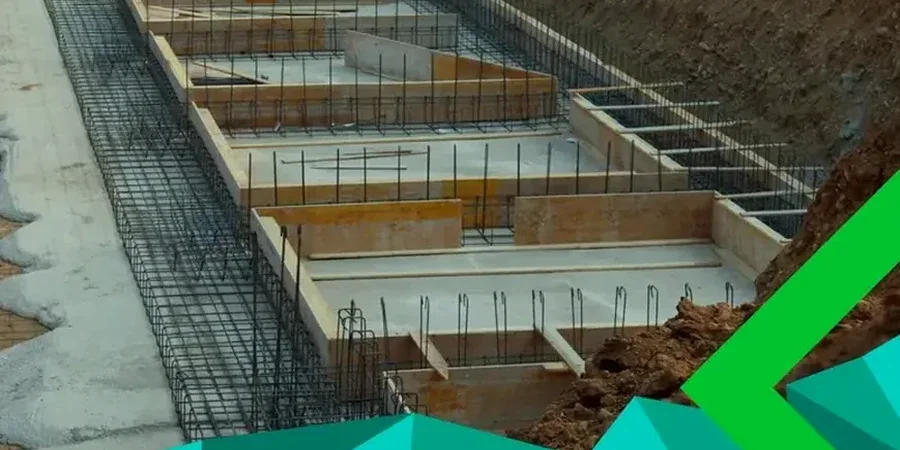
Risks and considerations in Nanaimo
The expansion of Nanaimo's Old City Quarter and the waterfront redevelopment around Port Drive have pushed construction onto steeply sloping terrain and reclaimed land. The geotechnical risk here is not simply bearing failure—it is the combination of static eccentricity from stepped footings and the kinematic demands of shallow crustal earthquakes originating in the Cascadia subduction zone. When a strip footing is placed near a descending slope, the passive wedge truncates, reducing the ultimate bearing capacity by 15 to 30 percent. In our shallow foundation design, we analyze this geometry with limit equilibrium methods and verify the liquefaction susceptibility of loose saturated sands beneath the footing influence zone using SPT-based triggering procedures from Idriss and Boulanger. Ignoring the slope proximity factor in Nanaimo's hillside subdivisions can result in a rotational failure during a design-level earthquake, a scenario we routinely mitigate by deepening the key or switching to a tied foundation system.
Our services
The shallow foundation design package is structured to move from site characterization to construction-ready drawings with minimal iteration, reflecting the specific demands of the Nanaimo soil profile.
Bearing Capacity & Settlement Analysis
We calculate net allowable bearing pressures using Vesic's bearing capacity equation with strength parameters from consolidated-undrained triaxial tests on undisturbed Shelby tube samples. One-dimensional consolidation settlement is projected for each compressible sub-layer, and the time-rate curve is calibrated against oedometer data to advise the structural engineer on expected post-construction distortion.
Seismic Performance Verification
For Site Classes C and D, we evaluate bearing capacity degradation under cyclic loading, checking the reduced foundation width against the NBCC overturning and sliding limit states. Where the liquefaction potential index exceeds moderate risk, we recommend ground densification via vibrocompaction or a transition to a rigid mat foundation to maintain a stable load path.
Foundation Type Comparison & Documentation
We produce a comparative technical memorandum contrasting isolated footings, continuous strip footings, and stiffened raft options, factoring in the construction cost of formwork versus the performance gain of a monolithic pour on variable ground. The final deliverable includes CAD-ready plan dimensions, reinforcement concepts, and a sealed geotechnical report suitable for the City of Nanaimo building permit submission.
Quick answers
What is the typical cost range for a shallow foundation design report for a single-family dwelling in Nanaimo?
For a standard residential lot in Nanaimo, the shallow foundation design and accompanying geotechnical investigation typically range between CA$2,840 and CA$4,410, depending on the number of test pits, the depth of the boreholes required to penetrate the till, and the complexity of the seismic site response analysis.
How does the NBCC 2020 seismic hazard affect shallow foundation sizing in Nanaimo?
The NBCC 2020 imposes higher spectral accelerations for the Nanaimo region compared to the 2015 edition, particularly for short-period structures on Site Class C. This increases the overturning moment demand on footings, often requiring a wider base or a deeper embedment to mobilize sufficient passive resistance, especially in the silty soils near the Nanaimo River estuary.
Can you design a shallow foundation if the soil profile contains glacial till over soft clay?
Yes, but it requires a careful stiffness contrast analysis. We use load-spread methods and numerical subgrade reaction models to ensure the stress bulb does not overstress the underlying soft layer. In several Nanaimo projects near Cinnabar Valley, we have successfully used a crust-reinforced strip footing, where the stiff till bridges the load over the weaker marine deposit, verified through settlement monitoring.
What laboratory tests are essential for a reliable shallow foundation design?
At minimum, we run moisture content, Atterberg limits, and consolidated-undrained triaxial tests to define the effective stress strength envelope. For compressible silts, one-dimensional consolidation tests with load-unload cycles are critical to isolate the recompression ratio and predict the magnitude of post-construction settlement under the footing's sustained dead load.