The most expensive mistake we see in Nanaimo is pouring a standard thickened-edge slab on uncontrolled fill and hoping for the best. You might get away with it for a few seasons, but the combination of wet winters and moderate seismicity has a way of exposing poor ground preparation. A proper raft foundation design distributes building loads across a larger footprint, bridging soft spots that would otherwise cause differential settlement. This approach becomes essential when you are dealing with the silty marine clays found near Departure Bay or the loose colluvium on the slopes above Hammond Bay Road. We pair the structural design with a clear understanding of what lies beneath the surface, often relying on test pits to confirm stratigraphy before finalizing the reinforcement layout, ensuring the slab thickness and steel schedules match the actual site conditions rather than optimistic textbook assumptions.
A well-designed raft foundation turns a problematic Nanaimo site with variable fill into a predictable, unified structural platform.
Technical details of the service in Nanaimo
Risks and considerations in Nanaimo
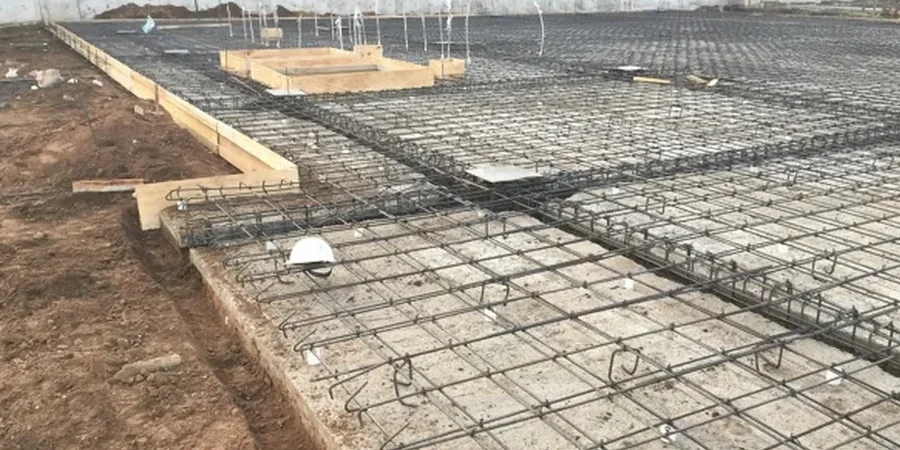
The coastal humidity in Nanaimo drives a wetting front that can penetrate deep into the vadose zone, softening the upper layers of clay and reducing their bearing capacity during the rainy season. If you place a raft foundation on a subgrade that has not been properly drained or scarified and recompacted, you create a bathtub effect where water ponds beneath the slab, leading to long-term strength degradation and heave in freeze-thaw cycles. The contrast between the dry, stiff summer ground and the saturated winter conditions means the modulus of subgrade reaction is a moving target. Our design explicitly accounts for this seasonal variation by specifying capillary breaks, underslab drainage layers, and perimeter foundation drains that discharge to a positive outfall. Ignoring this moisture sensitivity in the raft design is the quickest way to generate a warranty claim on the building envelope within the first five years.
Our services
Our raft foundation scope covers the structural design, site investigation requirements, and construction-phase support to keep the slab performing as intended:
Raft and Mat Structural Design
Full design of rigid mats for residential, commercial, and light industrial structures. We carry out reinforcement drawings, edge thickening details, and joint layouts that accommodate thermal and shrinkage effects typical of Nanaimo's climate and soil conditions.
Subgrade Preparation and Monitoring
Specification of the compaction protocol, moisture conditioning, and proof-rolling to achieve the design subgrade modulus. We monitor the placement of the mud slab and vapor barrier to ensure the foundation bears on a uniform, drained surface.
Quick answers
What is the typical cost range for a raft foundation design in Nanaimo?
For a standard single-family residential raft foundation, the structural design and site-specific recommendations typically run between CA$1,600 and CA$6,310, depending on the complexity of the soil profile and the seismic demands of the site.
When is a raft foundation a better choice than strip footings in Nanaimo?
A raft foundation makes sense when the near-surface soils have low bearing capacity, when you are building on variable fill, or when you want to minimize excavation depth. It is also preferred in higher seismic zones where a rigid mat helps prevent differential movement between structural elements.
Do you need to do soil testing before designing the raft foundation?
Yes, the design relies on knowing the soil's modulus of subgrade reaction and the depth to any compressible layers. Without a geotechnical investigation that includes test pits or SPT drilling, you are essentially guessing on the soil stiffness, which leads to either an over-conservative or an under-designed slab.
How does the raft design account for Nanaimo's earthquake risk?
The reinforcement detailing follows the ductility requirements of CSA A23.3, and the mat thickness is checked for the overturning and sliding demands from the NBCC seismic provisions. We also evaluate the potential for liquefaction or cyclic softening in the underlying soils to ensure the raft can span over any softened zones without structural distress.