Nanaimo sits on a complex glacial geology where dense till can shift to soft marine clay within the length of a single lot. The water table in areas like Departure Bay or the downtown core often shows up less than 3 meters below grade, which changes everything about how you read an N-value. We run the standard penetration test here with a calibrated 140-pound hammer and a 30-inch drop, logging blow counts every six inches through the full depth of the investigation. That split-spoon sample tells us more than just a number—it gives you a physical record of seams, lenses, and transitions that a cone alone can miss. In a city with Nanaimo's seismic exposure, where the 1946 earthquake reached magnitude 7.3 just up-Island, the difference between refusal at 15 feet and refusal at 45 feet has real consequences for your structural budget. We see this every week on sites from Lantzville down to Chase River, and the data never lies.
On Nanaimo's glacial terrain, three SPT boreholes spaced 50 feet apart can show completely different refusal depths—that's not an anomaly, that's the geology.
Technical details of the service in Nanaimo
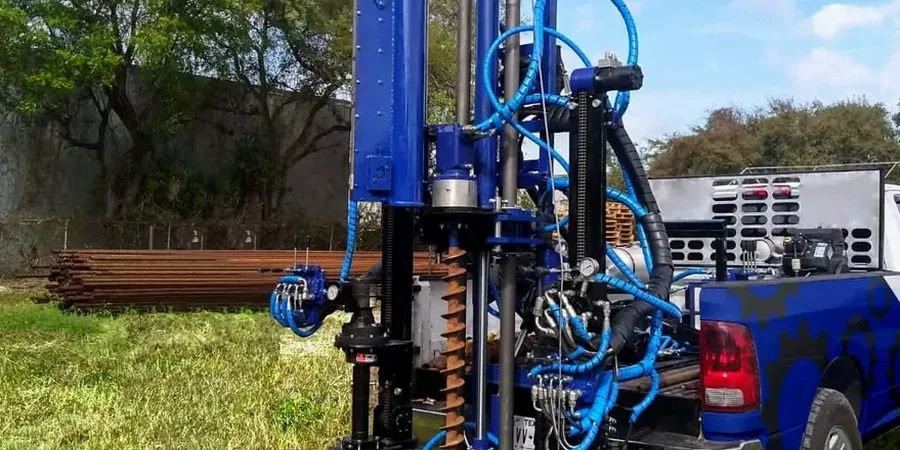
Risks and considerations in Nanaimo
Nanaimo's growth from a coal-mining port in the 1850s into a regional hub has pushed development onto land that the original town never touched—steep slopes above the E&N railway corridor, reclaimed shoreline along the harbour, and fractured sandstone benches south of the city. The geotechnical legacy of that expansion means SPT refusal depths can vary wildly, and groundwater perched in weathered bedrock creates conditions that fool a casual reading of the blow counts. We have seen projects where loose colluvium overlies apparently competent sandstone, and the N-values spike at the contact—but the real risk sits in the fractured zone two meters deeper that a short borehole never reaches. If you are putting in a retaining wall or a deep excavation on a sloped site, we recommend pairing the SPT data with a slope stability analysis to understand how the soil profile behaves under cut conditions, not just under the static load of a footing.
Our services
Every site in Nanaimo has its own story, and our SPT program is built to match what the ground actually needs—not a cookie-cutter template. Here is how we structure the work to give you data that your structural engineer can use without guesswork.
Standard SPT Boreholes
Drilled to depths of 10 to 60-plus feet using hollow-stem auger or mud rotary depending on site conditions. We log N-values, recovery, and soil description at every six-inch interval. You get a field log on-site and a final typed report with elevation-referenced stratigraphy.
Combined SPT and Sampling Program
Split-spoon samples are bagged, labeled, and transported under chain of custody to our lab for grain-size distribution, Atterberg limits, and moisture content. We can add Shelby tube sampling in cohesive layers when undisturbed strength parameters are needed.
Liquefaction Screening Package
For sites in Nanaimo's higher seismic hazard zones, we run SPT-based liquefaction assessment using Seed and Idriss methodology with N60 corrections. The report includes factor of safety calculations at depth for design earthquake scenarios consistent with NBCC 2020.
Quick answers
How deep do you typically drill SPT boreholes in the Nanaimo area?
It depends on the structure and the site geology, but most residential and light commercial investigations in Nanaimo go to 20 to 40 feet below grade. On slopes or near the harbour, we often go deeper—50 feet or more—to get past the weathered zone and confirm refusal in competent till or bedrock. The NBCC requires borings deep enough to capture all strata that will feel the foundation load, and we design the depth to satisfy that.
What does an SPT test program cost for a typical single-family lot?
For a standard residential lot in Nanaimo with three boreholes to 25 or 30 feet, you are generally looking at a range of CA$680 to CA$1,060 per borehole depending on access, drilling method, and lab testing requirements. A full program with three holes, logging, sampling, and a signed report tends to fall in that bracket. Sites with difficult access or deeper drilling will push toward the upper end.
Can SPT data be used for liquefaction assessment under the NBCC?
Yes, and it is one of the standard methods for it. We correct the raw N-values to N60—adjusting for hammer energy, rod length, borehole diameter, and overburden pressure—then run the Seed and Idriss simplified procedure to calculate the factor of safety against liquefaction at each depth. The NBCC 2020 seismic hazard values for Nanaimo drive the earthquake magnitude and peak ground acceleration inputs for that analysis.
How soon can you mobilize a drill rig to a site in Nanaimo?
Typical lead time is 5 to 10 business days once the scope is confirmed and the utility locates are cleared. BC One Call is mandatory before any drilling, and that can take a few days depending on their workload. We coordinate the locate request, access arrangements, and traffic control if needed so the rig shows up ready to drill.